



The short answer
Yes, but only on a stove that gets properly hot on top.
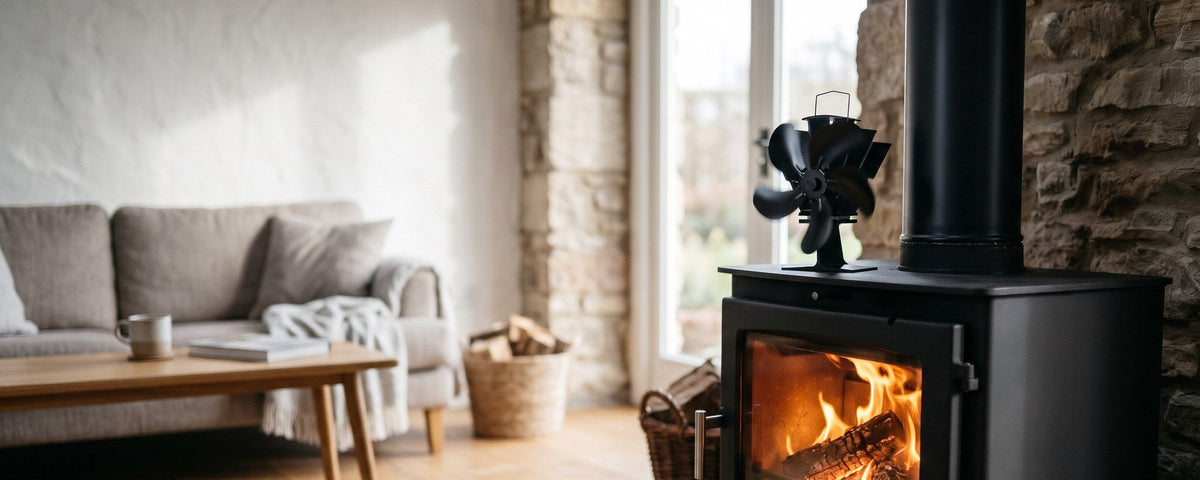
On a steel or cast iron stove, a stove fan noticeably spreads the heat better through the room. On a soapstone stove or a modern double-walled stove, you'll barely notice it.
Don't expect wind, or extra heat. It gently pushes warm air into the room before it rises to the ceiling.
Mind the word: a stove fan is different from a fan heater, which is an electric heater. This is about the plug-free fan that sits on your wood stove. We don't sell that, but we do sell everything else for your stove in the fireplace accessories.
How does a stove fan work without electricity?
At the bottom sits a plate that generates electricity from a temperature difference. This is called the Seebeck effect. The base sits on the hot stove, the cooling fins on top stay cooler. The bigger the difference, the harder it spins.
That's why it barely spins on a lukewarm stove. And your stove doesn't give off any more heat because of it. An independent British test found the same thing: the same amount of heat, it just reaches the sofa sooner.
Which stove does a stove fan work on?
Works well. The top plate gets hot and releases heat quickly.
Works well. Especially on older stoves without secondary combustion, which lose most of their heat straight upwards.
Little effect. Soapstone stays cooler on the outside. Some models start at a lower temperature, but don't expect much from them.
Little effect. The double wall already makes air flow on its own, doing most of what the fan promises.
Not suitable. It moves air gently. On the sofa, the most you'll notice is it getting cosy a bit sooner.
Dry wood makes more difference than any fan
A fan runs on a hot top plate, and a hot stove starts with dry wood. Wet wood spends its energy evaporating water: the stove stays lukewarm and the glass turns black.
Burn wood with less than 20 percent moisture. Let it dry under cover for at least a year, hardwood often two.
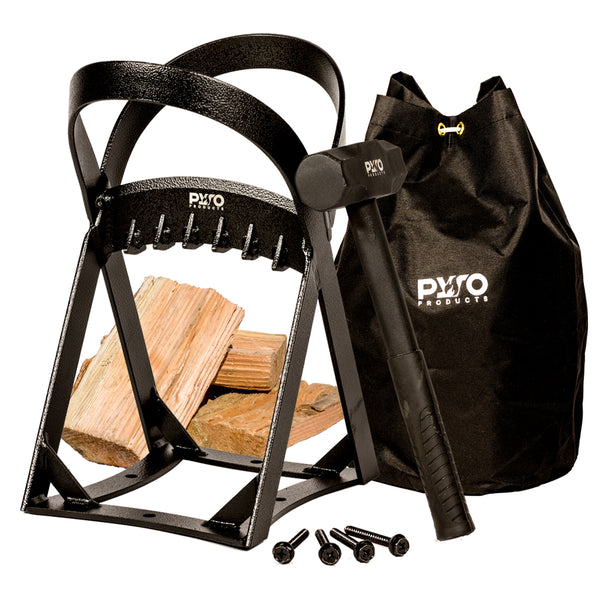
If you split it yourself, the stove wins twice. Split wood dries much faster than whole logs, and thin kindling gets the stove hot sooner. With the Cast Iron Log Splitter (Ø24 cm), you don't even need an axe: log in the ring, a few hits with the hammer, and it splits straight through. Which splitter suits your wood is explained in which log splitter to choose.
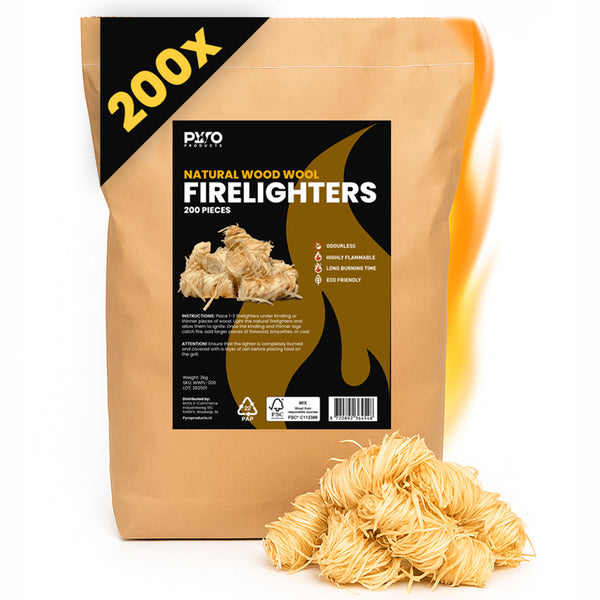
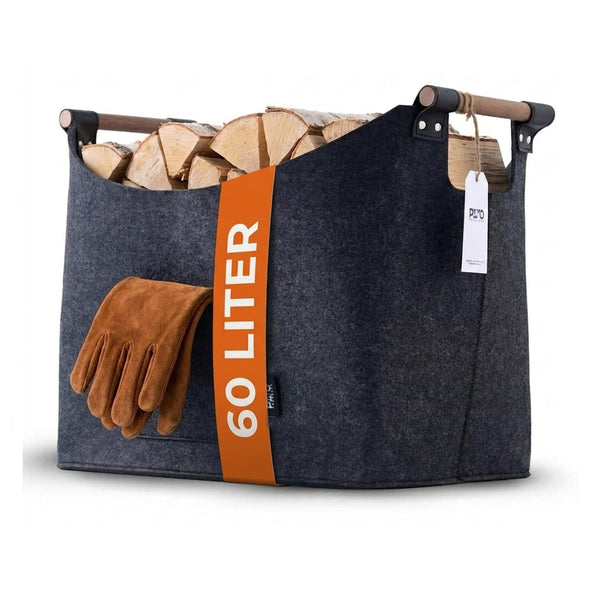
The night before, bring some logs inside in a Felt Log Basket (60 litres). Then light it quickly with Fire Starters 2 kg (200 pieces). Why we prefer those is explained in fire starter curls or firelighter cubes.
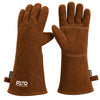
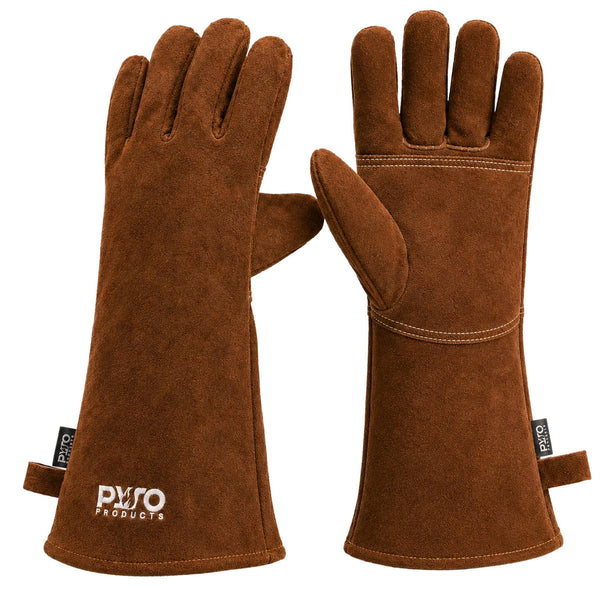
Never pick up a hot fan with bare hands: the base gets just as hot as the stove. With the Heat-Resistant Leather Gloves, you can.
Why so many people are disappointed
In a Dutch Facebook group about wood stoves, someone asked in early November whether people were happy with their fan. Over thirty replies came in, and roughly two in three were negative.
The complaints: doesn't work, makes noise, rattles loose, sits unused in the cupboard. One person had tested for weeks and measured no difference two metres from the stove.
The positive replies had two things in common. Either a steel or cast iron stove, or the original: the Ecofan from Canada's Caframo. People wrote that it's quiet and runs for ten years without issues.
Most complaints were about the cheap versions costing around 30 euros, found at DIY stores, supermarkets and webshops. Noise, rattling blades and a short lifespan. The pricier ones are quieter and last longer, but don't work miracles either.
Checklist before you buy a stove fan
Steel or cast iron: good chance. Soapstone or a double-walled stove: little effect.
Measure first. A magnetic stove thermometer costing a few euros tells you how hot your stove gets on top. Most fans need around 100°C to really move air.
It's on the packaging. The lower, the better for a stove that doesn't get very hot. Cheap models often promise 40 to 50°C, but starting up isn't the same as actually moving air.
Also important. For the Ecofan, that's 345°C. Above that, the element can be damaged.
Choose a brand with a sturdy axle and solid blades. For the cheap versions, most complaints were about noise.
Around 30 euros for the cheap ones, roughly double that or more for a branded model.
Where do you place a wood stove fan?
At the back of the stove, to the side of the flue. This way it draws in cooler air from behind and blows the warm air over the top plate into the room. That's also what Caframo itself recommends, and the British test found it has more effect at the back than at the front.
Don't place it against the pipe. The cooling fins get too hot there, the temperature difference becomes smaller and it spins slower.
Alternatives that often work better
A ceiling fan on a low setting. Warm air builds up under the ceiling. A ceiling fan on its lowest setting, or winter mode if it has one, gently pushes that air back down.
An ordinary table fan on setting 1. In a corner of the room, pointed away from the stove or towards the ceiling. That sounds odd, but it sets the air in motion and the warmth spreads with it.
A radiator fan. Some people place one at a generous distance behind the stove. Do be careful though: such a device is made for the temperature of a radiator, not for the radiant heat of a wood stove. So keep well clear of it.
And stoke it well. A stove burning at temperature does more for the room than any gadget. For a clean way to do that, see lighting a fireplace using the Swiss method.
Frequently asked questions
Usually hardly at all. The outside of soapstone doesn't get as hot and releases heat slowly, so the element sees little temperature difference. Some models start at a lower temperature. Measure how hot your top plate gets first.
A good model is barely audible, just a soft hum. The cheap versions around 30 euros get the most complaints: rattling blades, a ticking shaft and loose parts. The noise often gets worse as it gets older.
Usually the top plate isn't hot enough, or it's placed too close to the pipe, so the difference between base and cooling fins is too small. Place it at the back, to the side of the flue. If it still doesn't spin on a hot stove, the element or motor is often broken, for example from overheating.
No. A fan heater is an electric heater that generates its own heat. A stove fan has no plug and generates no heat. It sits on your wood stove and spreads the heat that stove already produces.
That hasn't been proven. It doesn't generate extra heat, it only distributes what the stove already gives off. Anyone who warms up faster because of it may burn slightly less wood. We haven't found an independent measurement that proves this.
The original, Caframo's Ecofan, gets the best reviews: quiet and reliable for years. More important than the brand is whether it suits your stove. Check the start and maximum temperature and compare that with what your top plate reaches.
Our conclusion: the stove first, then the fan
A stove fan isn't nonsense, but it's no miracle cure either. On a hot steel or cast iron stove, it gets the heat to the sofa faster. On soapstone or a modern double-walled stove, it often stays unused.
If you still want one, buy a quiet branded model and measure how hot your stove gets first. And start with dry wood and a good start. For what you need for that, check our fireplace lighters and the rest of our fireplace accessories.
Related articles
 Fireplace
Top down fire: lighting your fireplace from the top
 Fireplace
A gift for someone with a fireplace
 Fireplace
Which log splitter suits your firewood?
Want more articles like this?
New tips, product comparisons and exclusive offers straight to your inbox. Plus 10% off your first order.